
FSH=follicle stimulating hormone; LH=luteinizing hormone; Recombinant=a laboratory-made exact copy of a natural hormone.
[Now FDA approved]
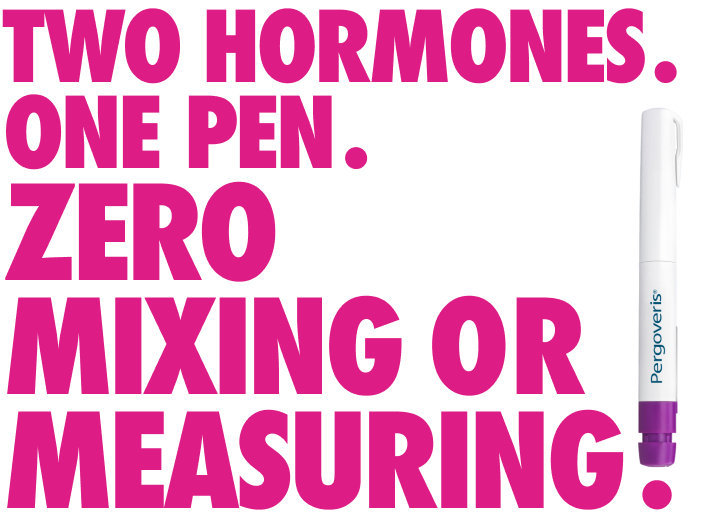
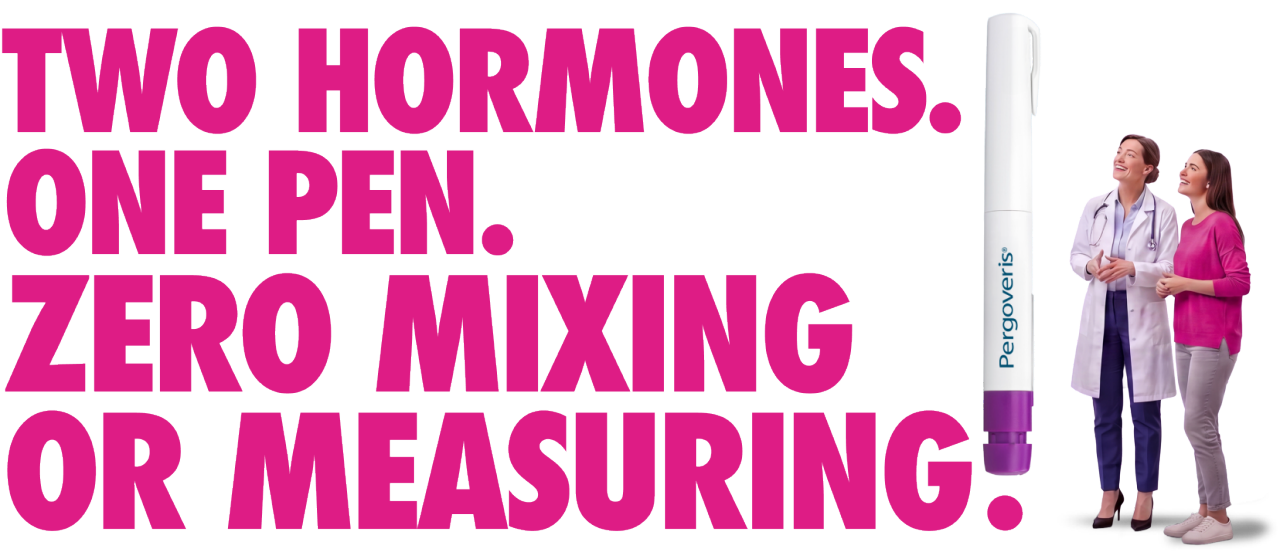
THE FIRST-AND-ONLY combination of recombinant human FSH + LH.1-5
INDICATION
PERGOVERIS is a prescription medicine that contains recombinant human follicle stimulating hormone (r-hFSH) and recombinant luteinizing hormone (r-hLH) used in infertile women to help ovaries to develop (mature) and release eggs and to assist with becoming pregnant.
IMPORTANT SAFETY INFORMATION
Do not use PERGOVERIS if you:
- are allergic to r-hFSH or r-hLH or any of the ingredients in PERGOVERIS
- have a high level of FSH in your blood that shows your ovaries no longer make eggs (primary ovarian insufficiency).have uncontrolled thyroid, adrenal or pituitary problems
- have a tumor in your female organs, including your ovaries, breast, or uterus that may get worse with high levels of estrogen
- have a tumor in your brain, such as a tumor in your pituitary or hypothalamus
- have abnormal bleeding from your uterus or vagina from an unknown cause
- have ovarian cysts or large ovaries from an unknown cause
Before using PERGOVERIS, tell your healthcare provider about your medical history including any prescription or over-the-counter medicines, vitamins and herbal supplements used, whether you have or have had asthma, blood clots (thrombosis) or family history of blood clots, abdominal surgery, twisting of your ovary (ovarian torsion), ovarian cysts, polycystic ovarian disease, are or may be pregnant, or are breastfeeding or plan to breastfeed.
PERGOVERIS may cause serious side effects, including:
- Severe or fatal allergic reactions. Stop using PERGOVERIS and go to the hospital right away if you have symptoms which can include shortness of breath, swelling of your face, itchy, red bumps or rash on your skin (hives).
- ovaries that are too large. Symptoms of large ovaries include bloating or pain in your lower stomach (pelvic) area.
- ovarian hyperstimulation syndrome (OHSS). OHSS is a serious medical condition that can happen when your ovaries produce too many eggs (overstimulated). OHSS can cause fluid to suddenly build up in the area of your stomach, chest, and heart, and can cause blood clots to form. In rare cases OHSS has caused death. OHSS may also happen after you stop using PERGOVERIS. Stop using PERGOVERIS and call your healthcare provider right away if you have: trouble breathing, severe lower stomach (pelvic) area pain, decreased urine output, nausea, vomiting, weight gain, or diarrhea.
- lung problems. PERGOVERIS may cause serious lung problems including fluid in your lungs (atelectasis), trouble breathing (acute respiratory distress syndrome), and worsening of asthma.
- blood clots. PERGOVERIS may increase your chance of having blood clots in your blood vessels. Blood clots can cause blood vessel problems (thrombophlebitis), stroke, loss of your arm or leg, or blood clot in your lung (pulmonary embolus).
- twisting (torsion) of your ovary. PERGOVERIS may increase the chance of your ovary twisting if you already have certain conditions such as OHSS, pregnancy and previous abdominal surgery. Twisting of your ovary may lead to blood flow being cut off to your ovary.
- pregnancy with and birth of multiple babies. Having a pregnancy and giving birth to more than 1 baby at a time increases the health risk for you and your babies.
- birth defects. A baby born after an ART cycle may have an increased chance of having birth defects. Your chances of having a baby with birth defects may increase depending on: your age, certain sperm problems, your genetic background and that of your partner, or a pregnancy with more than 1 baby at a time.
- ectopic pregnancy (pregnancy outside your womb). Your chance of having an ectopic pregnancy is increased if you also have fallopian tube problems. Call your healthcare provider right away if you have symptoms including stomach or pelvic pain especially on one side, shoulder pain, neck pain, rectal pain, or nausea and vomiting.
- miscarriage. Your chance of loss of an early pregnancy may be increased if you had difficulty becoming pregnant.
- tumors of the ovary. If you have used medicines like PERGOVERIS more than 1 time to get pregnant, you may have an increased chance of having tumors in your ovary(ies) (including cancer).
The most common side effects of PERGOVERIS include OHSS, headache, nausea, stomach pain, injection site swelling (redness and pain), and allergic reactions.
These are not all the possible side effects of PERGOVERIS. Tell your healthcare provider if you have any side effect that bothers you or that does not go away. Call your doctor for medical advice about side effects.
To report SUSPECTED ADVERSE REACTIONS, contact EMD Serono at: 1-800-283-8088 ext. 5563 or FDA at 1-800-FDA-1088 or www.fda.gov/medwatch.
Please see [accompanying] full Prescribing Information, including Medication Guide [location].

Please see IMPORTANT SAFETY INFORMATION and Full Prescribing Information

INDICATION
PERGOVERIS is a prescription medicine that contains recombinant human follicle stimulating hormone (r-hFSH) and recombinant luteinizing hormone (r-hLH) used in infertile women to help ovaries to develop (mature) and release eggs and to assist with becoming pregnant.
IMPORTANT SAFETY INFORMATION
Do not use PERGOVERIS if you:
- are allergic to r-hFSH or r-hLH or any of the ingredients in PERGOVERIS
- have a high level of FSH in your blood that shows your ovaries no longer make eggs (primary ovarian insufficiency).have uncontrolled thyroid, adrenal or pituitary problems
- have a tumor in your female organs, including your ovaries, breast, or uterus that may get worse with high levels of estrogen
- have a tumor in your brain, such as a tumor in your pituitary or hypothalamus
- have abnormal bleeding from your uterus or vagina from an unknown cause
- have ovarian cysts or large ovaries from an unknown cause
Before using PERGOVERIS, tell your healthcare provider about your medical history including any prescription or over-the-counter medicines, vitamins and herbal supplements used, whether you have or have had asthma, blood clots (thrombosis) or family history of blood clots, abdominal surgery, twisting of your ovary (ovarian torsion), ovarian cysts, polycystic ovarian disease, are or may be pregnant, or are breastfeeding or plan to breastfeed.
PERGOVERIS may cause serious side effects, including:
- Severe or fatal allergic reactions. Stop using PERGOVERIS and go to the hospital right away if you have symptoms which can include shortness of breath, swelling of your face, itchy, red bumps or rash on your skin (hives).
- ovaries that are too large. Symptoms of large ovaries include bloating or pain in your lower stomach (pelvic) area.
- ovarian hyperstimulation syndrome (OHSS). OHSS is a serious medical condition that can happen when your ovaries produce too many eggs (overstimulated). OHSS can cause fluid to suddenly build up in the area of your stomach, chest, and heart, and can cause blood clots to form. In rare cases OHSS has caused death. OHSS may also happen after you stop using PERGOVERIS. Stop using PERGOVERIS and call your healthcare provider right away if you have: trouble breathing, severe lower stomach (pelvic) area pain, decreased urine output, nausea, vomiting, weight gain, or diarrhea.
- lung problems. PERGOVERIS may cause serious lung problems including fluid in your lungs (atelectasis), trouble breathing (acute respiratory distress syndrome), and worsening of asthma.
- blood clots. PERGOVERIS may increase your chance of having blood clots in your blood vessels. Blood clots can cause blood vessel problems (thrombophlebitis), stroke, loss of your arm or leg, or blood clot in your lung (pulmonary embolus).
- twisting (torsion) of your ovary. PERGOVERIS may increase the chance of your ovary twisting if you already have certain conditions such as OHSS, pregnancy and previous abdominal surgery. Twisting of your ovary may lead to blood flow being cut off to your ovary.
- pregnancy with and birth of multiple babies. Having a pregnancy and giving birth to more than 1 baby at a time increases the health risk for you and your babies.
- birth defects. A baby born after an ART cycle may have an increased chance of having birth defects. Your chances of having a baby with birth defects may increase depending on: your age, certain sperm problems, your genetic background and that of your partner, or a pregnancy with more than 1 baby at a time.
- ectopic pregnancy (pregnancy outside your womb). Your chance of having an ectopic pregnancy is increased if you also have fallopian tube problems. Call your healthcare provider right away if you have symptoms including stomach or pelvic pain especially on one side, shoulder pain, neck pain, rectal pain, or nausea and vomiting.
- miscarriage. Your chance of loss of an early pregnancy may be increased if you had difficulty becoming pregnant.
- tumors of the ovary. If you have used medicines like PERGOVERIS more than 1 time to get pregnant, you may have an increased chance of having tumors in your ovary(ies) (including cancer).
The most common side effects of PERGOVERIS include OHSS, headache, nausea, stomach pain, injection site swelling (redness and pain), and allergic reactions.
These are not all the possible side effects of PERGOVERIS. Tell your healthcare provider if you have any side effect that bothers you or that does not go away. Call your doctor for medical advice about side effects.
To report SUSPECTED ADVERSE REACTIONS, contact EMD Serono at: 1-800-283-8088 ext. 5563 or FDA at 1-800-FDA-1088 or www.fda.gov/medwatch.
Please see [accompanying] full Prescribing Information, including Medication Guide [location].